
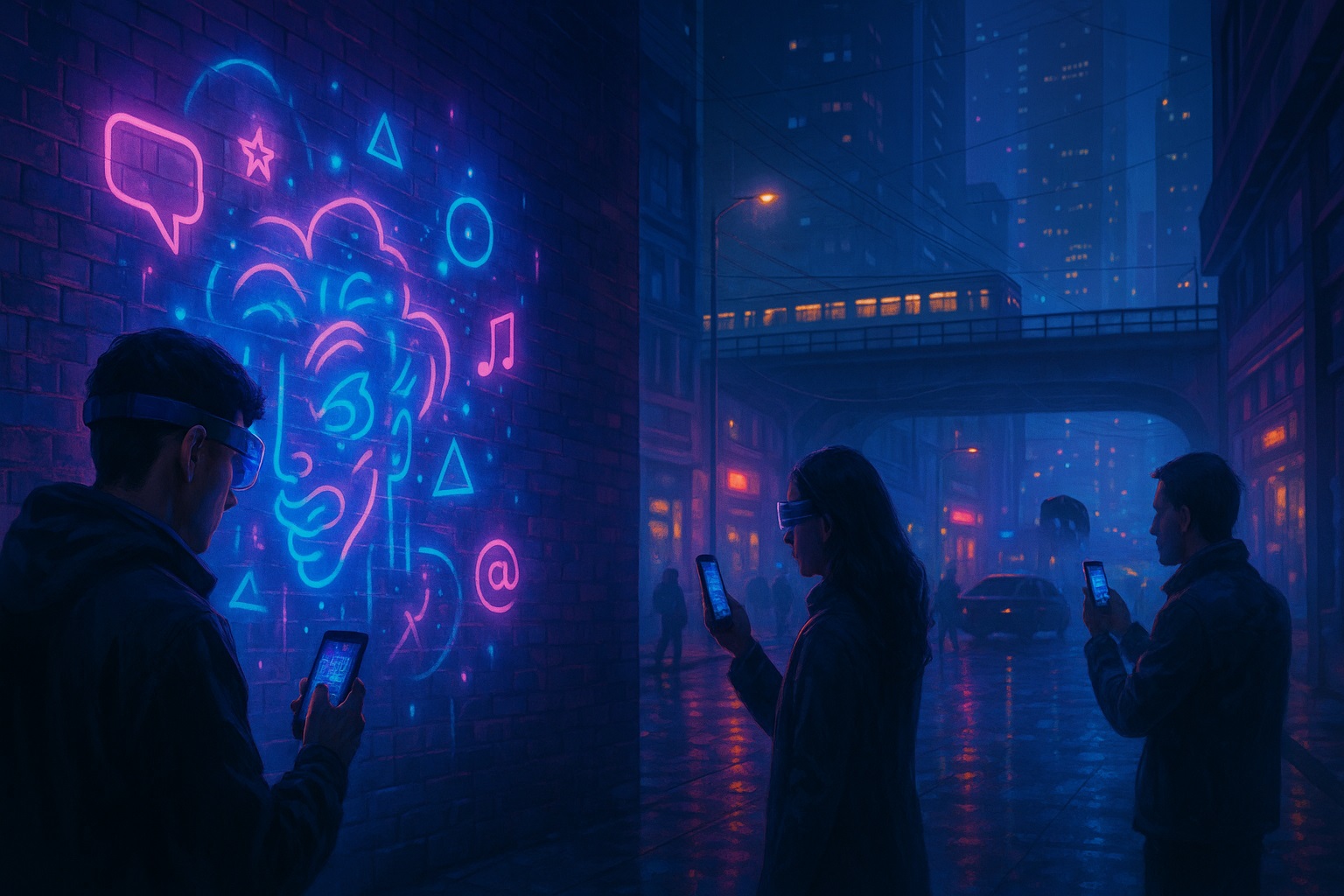
A Blend of Art and Technology
Virtual graffiti is a fascinating fusion of creativity and digital innovation. It involves the use of virtual objects, digital images, multimedia, and interactive graphics projected onto public spaces such as walls, bridges, and trains. These virtual markings are created using technologies like Virtual Reality (VR) and Ubiquitous Computing, which anchor digital art to physical locations, allowing users to experience graffiti in entirely new ways.
How Virtual Graffiti Works
Unlike traditional graffiti, virtual graffiti does not rely on spray paint or physical alteration of surfaces. Instead, virtual content can be viewed through portable digital devices such as smartphones, tablets, personal computers, and even smart televisions. Through augmented and virtual reality interfaces, users can see art and messages layered over real-world structures. This flexibility makes it possible to deliver visual experiences that would otherwise be impossible in the physical world.
A New Medium for Expression and Communication
The concept of a virtual graffiti wall represents a new frontier for communication and social interaction. It allows people to send and receive multimedia messages, artistic expressions, and digital content tied to specific places and communities. This innovation blends art with technology, creating a unique space where creativity meets connectivity. Such digital environments can host community events, social movements, or even marketing campaigns, all based on location-specific engagement.
Merging Virtual Reality with Location-Based Services
One of the most exciting aspects of virtual graffiti is its integration with location-based services and TelePresence technologies. These features create a fully immersive experience by linking virtual content directly to real-world coordinates. Over time, these experiences can evolve according to users’ preferences, community participation, and technological improvements, making them both interactive and adaptive.
Practical Applications and Everyday Use
Virtual graffiti extends beyond art and entertainment. It has practical uses in advertising, public safety, and information sharing. For instance, a user could receive promotional messages from nearby restaurants or safety alerts about road accidents along their route. These examples show how virtual graffiti merges creativity with functionality, delivering real-time, context-aware information through engaging visuals.
The Concept of Anchored Virtual Reality
Anchoring virtual experiences in specific physical locations is central to digital graffiti. This ensures that what users see through their devices corresponds to real-world spaces. Imagine a virtual command post appearing at the site of an emergency, where rescue workers can share live updates or coordinate efforts through an immersive virtual interface accessible only at that location. This blend of virtual and physical reality enhances both communication and situational awareness.
From Digital Messages to Contextual Interaction
The roots of virtual graffiti go back to early forms of digital communication, such as electronic bulletin board systems. Over time, these systems evolved from simple message sharing into complex forms of contextual and location-based interaction. Today, the concept stands as a symbol of how technology can transform everyday environments into interactive storytelling spaces.
Conclusion: The Future of Virtual Expression
Virtual graffiti is redefining how humans interact with their surroundings. By merging art, technology, and communication, it opens the door to new possibilities for creativity and information sharing. As VR and AR technologies continue to advance, virtual graffiti could become a mainstream form of digital expression, blending imagination with the tangible world in ways that inspire and connect communities.